
What Is RSS3 Natural Rubber — And Why Is It the World's Most Traded Rubber Grade?
By Chi itxeasy - 03/04/2026 - 0 comments
In commodity markets, in tire factories, in industrial rubber compounding plants from China to Germany to Brazil — one product comes up more consistently than any other when sourcing natural rubber: RSS3.
RSS3 is the most widely traded grade within the Ribbed Smoked Sheet category and serves as the benchmark contract traded on the Tokyo Commodity Exchange (TOCOM). Edutrade For industrial buyers who work with natural rubber, understanding RSS3 — what it is, how it's made, where it comes from, and how it compares to other grades — is foundational knowledge.
What RSS3 Actually Is
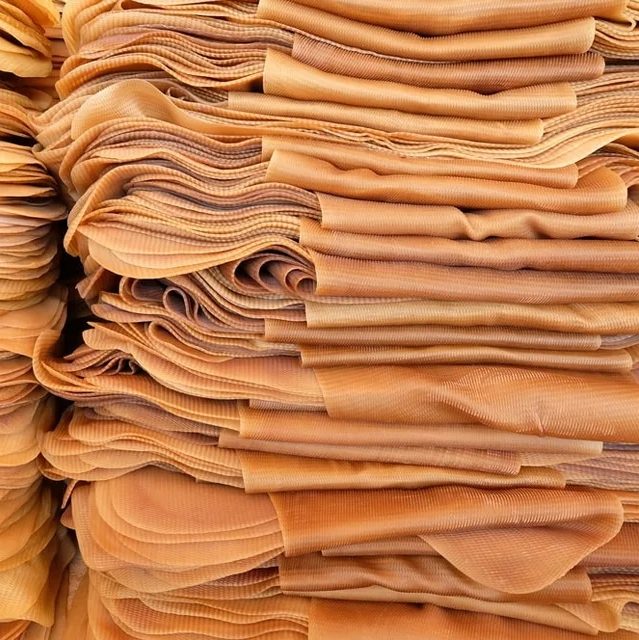 RSS stands for Ribbed Smoked Sheet. RSS rubber is a premium grade of natural rubber manufactured from high-quality latex through a specialized coagulation and smoking process — formed into thin sheets with distinctive ribbed patterns that aid in drying and handling. Thainaturalrubber
The number 3 indicates the grade. RSS grades are divided into five categories based on color, elasticity, and purity — RSS1 being the highest grade, RSS5 denoting the lowest quality. VIEGO GLOBAL RSS3 sits in the middle of this range, and it is by far the most commercially significant position — the grade that balances quality, consistency, and price in a way that makes it the default choice for the majority of industrial rubber applications worldwide.
How RSS3 Is Made
The production process is what gives RSS rubber its distinctive characteristics — and what differentiates it fundamentally from block rubber (SVR grades).
Fresh latex is collected from rubber trees, filtered, and diluted with clean water. Formic or acetic acid is added to coagulate the latex into a solid mass. The coagulated rubber is then passed through a series of rollers that press it into thin sheets and simultaneously impress the ribbed pattern that gives RSS its name.
The sheets are then dried in smokehouses at temperatures of approximately 50–60°C. Edutrade The smoking process serves multiple functions: it dries the rubber to the correct moisture level, gives RSS its characteristic amber-brown color, and provides natural preservation properties that protect the rubber during storage and long-distance shipping.
After smoking, sheets are visually inspected and graded. RSS3 allows small natural imperfections — minor specks, small bubbles — that would disqualify a sheet from RSS1 or RSS2 classification, but which have no meaningful impact on mechanical performance in the applications where RSS3 is typically used.
RSS3 vs. Other Grades: Where It Fits
RSS1: Highest purity, most uniform color, minimal visual defects. Used where extreme cleanliness is required — precision technical parts, specialty goods. Premium price.
RSS2: Slightly more imperfections than RSS1. Strong tensile properties. Used in high-quality footwear and selected tire compounds.
RSS3: Most widely traded. Minor imperfections allowed. Strong mechanical performance. Optimal balance of quality and cost. The backbone of global industrial rubber supply.
RSS4: More visible imperfections — stains, bubbles. Suitable for less demanding applications where aesthetics are not critical.
RSS5: Lowest RSS grade. Used in applications with minimal quality requirements.
For the vast majority of tire manufacturing, industrial hoses, conveyor belts, footwear soles, and general molded rubber goods — RSS3 delivers everything required at a price point that RSS1 cannot match at scale.
Vietnam's Position in the Global RSS3 Supply Chain
Vietnam is one of the world's largest natural rubber producers and exporters — and RSS3 is among its most significant export products. Key rubber-growing regions include the Southeast (Bình Dương, Bình Phước, Đồng Nai), the Central Highlands (Gia Lai, Đắk Lắk), and parts of the South Central Coast.
Vietnam's RSS3 is produced to international standards — adhering to ISO 2000:2014 and Vietnamese Standard TCVN 3769:2016, with key metrics including dirt content, ash, volatile matter, nitrogen, plasticity retention index (PRI), and Mooney viscosity documented in COA reports per shipment. Ngocchausupplier
For global buyers, Vietnam offers competitive pricing, reliable supply volumes, and established logistics through Ho Chi Minh Port and Hai Phong Port — with standard container loads of 19.2MT (33.33kg bales) or 20.16MT (35kg bales) per 20-foot container.
What Buyers Should Know When Sourcing RSS3
Specification verification: Always request a COA per batch. Key parameters to verify: dirt content, ash, volatile matter, nitrogen, and Mooney viscosity. These confirm the rubber meets the grade claimed.
Bale weight consistency: Standard bale weights are 33.33kg or 35kg. Inconsistent bale weights affect container optimization and production line feeding.
Color as a quality indicator: Properly produced RSS3 displays a consistent amber-brown color. Very dark or uneven color may indicate processing inconsistencies.
Seasonal supply considerations: RSS3 prices and supply are sensitive to weather conditions in major producing regions, with production typically increasing during rainy season and softening during dry season. Edutrade Planning procurement around seasonal supply cycles helps manage price exposure.
Payment and delivery terms: Standard terms are FOB or CIF, with T/T or L/C payment. Lead time for a single 20DC is typically 5–7 days from confirmed order.
Looking for a reliable RSS3 supplier from Vietnam? ITXeasy supplies natural rubber RSS3 — ISO 2000:2014 and TCVN 3769:2016 compliant — packed 33.33kg/bale, FOB Ho Chi Minh Port. COA available per batch. Samples on request.
📦 Samples available on request 📱 WhatsApp: +84 52 373 4193 ✉️ Email: info@itxeasy.com 🌐 Website: itxeasy.com
Tags: RSS3 Natural Rubber, Ribbed Smoked Sheet, Vietnam Rubber Export, Natural Rubber Grades, Tire Manufacturing Material, Industrial Rubber, B2B Rubber Sourcing, ISO 2000:2014, TCVN 3769:2016, ITXeasy
Latest

Palmyra Palm Seeds (Toddy Palm Seeds)
Product Description Palmyra Palm Seeds from Vietnam Our Palmyra Palm Seeds, also known as Todd..

Vietnamese Attap Seeds (Palm Seeds)
Product Description Premium Vietnamese Attap Seeds for International Markets Vietnamese Attap ..

Premium Vietnamese Salt Roasted Chestnuts for Export
Product Description Premium Vietnamese Salt Roasted Chestnuts Our Premium Vietnamese Salt Roas..

Premium Vietnamese Salted Roasted Cashew Nuts – B2B Export Supply
Product Description Premium Vietnamese Salted Roasted Cashew Nuts for European Markets Our Pre..

PURPLE GLUTINOUS RICE FLOUR
PURPLE GLUTINOUS RICE FLOUR – NUTRITIOUS, AROMATIC & NATURALLY WHOLESOME Purple Glutinous Ric..

Freeze-dried Pomegranate Juice Powder
Freeze-dried Pomegranate Juice Powder is made from carefully selected pomegranates, cold-pressed and..

Gac Powder
Gac Powder is made from carefully selected ripe Vietnamese gac fruits, processed and finely milled t..

BITTER MELON POWDER
Bitter Melon Powder is made from carefully selected Vietnamese bitter melons, thoroughly cleaned, ge..

Freeze Dried Dragon Fruit No Sugar Added Snack
FREEZE DRIED DRAGON FRUIT NO SUGAR ADDED SNACK Freeze Dried Dragon Fruit No Sugar Added Sna..

Freeze-Dried Betel Leaf Powder
FREEZE-DRIED BETEL LEAF POWDER Freeze-Dried Betel Leaf Powder is made from carefully select..

BLACK SESAME POWDER
BLACK SESAME POWDER – RICH, NUTTY & NATURAL SUPERFOOD Black Sesame Powder is made from carefu..

Freeze Dried Dragon Fruit Powder
Freeze-Dried Dragon Fruit Powder is made from carefully selected ripe Vietnamese dragon fruits, gent..