
Vietnamese Lime Leaf vs. Kaffir Lime Leaf — What's the Difference and Which Should You Source?
By Chi itxeasy - 03/04/2026 - 0 comments
If you've worked in Asian food manufacturing, restaurant supply, or herb and spice sourcing for any length of time, you've almost certainly encountered both. They're both called lime leaf. They're both used in Asian cuisine. They both come dried from Vietnam.
But Vietnamese lime leaf and kaffir lime leaf are not the same product — and sourcing the wrong one for your application is an easy mistake that costs time, money, and flavor quality.
Here's everything you need to know to tell them apart and choose correctly.
The Basics: Two Different Plants, Two Different Profiles
 Vietnamese Lime Leaf (Lá Chanh Ta) comes from the common lime tree — the same tree that produces the small, thin-skinned Vietnamese lime used widely in cooking and beverages across Southeast Asia. The leaf is oval to elongated, relatively small, and grows as a single leaflet.
Kaffir Lime Leaf (Lá Chúc / Lá Chanh Thái) comes from a completely different species — the kaffir lime tree (Citrus hystrix), which produces a bumpy, thick-skinned fruit with very little juice but extraordinarily aromatic leaves and zest. The leaf has a completely distinctive shape: a figure-8 double leaflet, two leaflets joined at a central node. Once you've seen it, you will never confuse it with any other herb.
These are not two varieties of the same leaf. They are two different plants with different aroma chemistry, different culinary applications, and different price points.
Shape: The Easiest Way to Tell Them Apart
This is the quickest identification test in any sourcing or quality control context.
Vietnamese Lime Leaf: Single oval or elongated leaf. Pointed tip. Smooth edges. Straightforward leaf shape with nothing unusual about it.
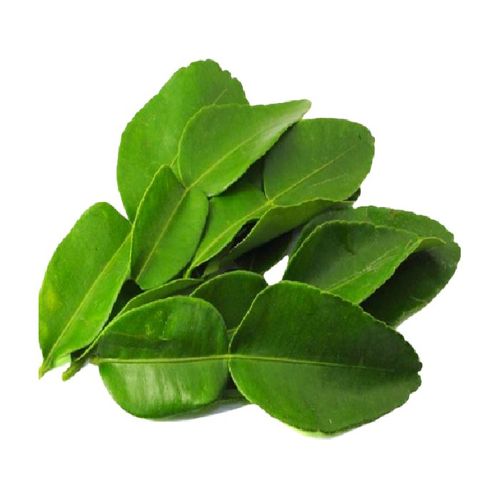
If you're inspecting a dried herb shipment and the leaves are figure-8 shaped — that's kaffir lime. If they're single ovals — that's Vietnamese lime leaf.
Aroma: Where the Real Difference Lives
Shape is easy to learn. Aroma is where the two varieties diverge most significantly — and where choosing correctly matters most for flavor outcomes.
Vietnamese Lime Leaf: Light, fresh, cooling citrus aroma. Clean and pleasant. Adds a gentle herbal lift to dishes without dominating other flavors. When dried properly, retains a mild, agreeable fragrance. If over-dried or poorly processed, can lose aroma intensity or develop a slight bitterness — which is why sourcing from a supplier with proper drying practices matters.
Kaffir Lime Leaf: Intense, complex, unmistakable. The aroma is simultaneously citrusy, floral, and faintly spiced — a depth of fragrance that Vietnamese lime leaf simply doesn't match. When properly dried, kaffir lime leaf retains its aroma exceptionally well — arguably better than fresh in some applications, as the drying process concentrates the volatile aromatic compounds. Critically, properly dried kaffir lime leaf does not become bitter — bitterness in dried kaffir leaf is a processing quality issue, not an inherent characteristic of the variety.
The aroma intensity difference between the two is significant enough that they are not interchangeable in most serious culinary applications.
Culinary Applications: Use the Right Leaf for the Right Dish
Vietnamese Lime Leaf is best for:
- Shredded over poached chicken (gà luộc lá chanh) — the defining Vietnamese application
- Steamed shellfish dishes — ốc hấp, hến xào
- Light soups and broths where subtle citrus lift is needed
- Traditional Vietnamese home cooking and street food applications
- Any dish where a gentle, background citrus herbal note is appropriate
Kaffir Lime Leaf is essential for:
- Tom Yum soup — non-negotiable ingredient, kaffir lime leaf defines the dish
- Thai green and red curry — provides the aromatic backbone alongside galangal and lemongrass
- Grilled and barbecued seafood and meat — particularly in Thai and Cambodian cuisine
- Any application requiring strong, persistent aromatic impact that survives heat
- Premium spice blends and seasoning mixes targeting Southeast Asian flavor profiles
The practical rule: if the dish is Thai or requires powerful aromatic impact — use kaffir. If the dish is Vietnamese and needs a subtle fresh lift — use Vietnamese lime leaf.
Price: Why Kaffir Lime Leaf Costs More
Kaffir lime leaf consistently commands a higher price than Vietnamese lime leaf — and for clear reasons.
First, supply is more constrained. Kaffir lime trees are not as widely cultivated as common lime trees in Vietnam. The primary source region — Bảy Núi in An Giang province — is geographically specific, and while new cultivation areas in Đồng Nai and the Central Highlands are emerging to meet export demand, total supply remains more limited than Vietnamese lime leaf.
Second, global demand is higher. Kaffir lime leaf is a globally recognized culinary ingredient — stocked in specialty food retailers from London to Tokyo, used in hotel kitchens and Michelin-starred restaurants worldwide. Vietnamese lime leaf, while beloved in its home cuisine context, has a more regionally concentrated demand base.
Third, the aroma profile is irreplaceable. There is no effective substitute for kaffir lime leaf in Tom Yum or Thai curry. When an ingredient has no substitute in high-demand dishes, it commands a premium.
Sourcing from Vietnam: What to Look For
Whether you're sourcing Vietnamese lime leaf or kaffir lime leaf, the same quality principles apply:
Aroma retention is the primary quality indicator. A dried lime leaf that has lost its aroma has lost its value. Ask for samples and assess fragrance immediately on opening — it should be immediately noticeable.
No bitterness in properly processed product. Bitterness indicates either improper drying temperature, over-drying, or poor raw material quality. For kaffir lime leaf specifically, bitterness is a processing fault — the variety itself is not bitter when handled correctly.
Leaf integrity — no crumbling, no broken fragments, no foreign matter. Intact dried leaves retain aroma better and present better at the point of use.
Origin transparency — knowing whether your kaffir lime leaf comes from Bảy Núi (An Giang) or a newer cultivation area helps you understand the flavor profile and consistency to expect.
Looking for dried Vietnamese or kaffir lime leaf for your business? ITXeasy supplies both varieties — dried, export-grade, from Vietnam's premier growing regions. Packed 1kg/bag or 10kg/PP sack with custom packaging available.
📦 Samples available on request 📱 WhatsApp: +84 52 373 4193 ✉️ Email: info@itxeasy.com 🌐 Website: itxeasy.com
Tags: Dried Lime Leaf, Kaffir Lime Leaf, Vietnamese Lime Leaf, Lá Chúc, Lá Chanh Thái, Tom Yum Ingredient, Thai Curry Herb, Asian Herb Export, Vietnam Herb Supplier, B2B Sourcing Guide, ITXeasy
Latest

DRIED EUCHEUMA SEAWEED
🌿 PRODUCT DESCRIPTION Dried Eucheuma Seaweed is produced from the fresh body of high-quality red ..

Frozen Gac Fruit Flesh
Frozen Gac Fruit Flesh is made from the fresh red membrane of ripe Gac fruit (Momordica cochinchinen..

DRIED SOURSOP LEAVES
SOURCE DRIED SOURSOP LEAVES FROM VIETNAM Dried Soursop Leaves are made from carefully selected fr..

Freeze-Dried Pandan Leaf Powder
Freeze-Dried Pandan Leaf Powder — Natural. Aromatic. Vibrant. Our freeze-dried pandan leaf powder..

CUTTLEFISH BONE (CUTTLEBONE)
Cuttlefish bone (also known as cuttlebone) is the internal hard shell of cuttlefish, with a natural ..

Processed Pineapple Leaf Fiber
Processed Pineapple Leaf Fiber (PALF) – Sustainable & High-Value Material Our processed pinea..

Eco-Friendly Pineapple Enzyme Dishwashing Liquid
Eco-Friendly Pineapple Enzyme Dishwashing Liquid – Natural & Sustainable Cleaning Our pineapp..

Anchovy Fish Sauce
Premium Anchovy Fish Sauce – Traditional Fermented Flavor from Vietnam Our premium anchovy fish s..

Dried Bitter Melon Vine (Dây Khổ Qua Khô)
Dried bitter melon vine (Momordica charantia) is a time-honored herbal remedy in traditional Vietnam..

Premium Terracotta Pottery from Vietnam – Handmade Natural Clay Products for Europe
Premium Terracotta Pottery – Natural Handmade Clay Products Our premium terracotta pottery from V..

Vietnamese Natural Ramie Leaves Powder (Bot La Gai Den)
Introduce your products to the authentic taste and color of Vietnam with ITXEasy's Natural Ramie Lea..

Vietnamese Boiled Sweet Potato — Nature's Most Honest Snack
Vietnamese Boiled Sweet Potato — Nature's Most Honest Snack No seasoning. No packaging. No brandi..