
What Is Rattan Pole? Types, Uses & Why Vietnam Is the Best Source
By Chi itxeasy - 26/03/2026 - 0 comments
What Is Rattan Pole? Types, Uses & Why Vietnam Is the Best Source
Rattan poles are one of the oldest and most widely traded natural raw materials in the world — yet for many buyers entering the furniture or handicraft supply chain for the first time, the product landscape can be confusing. What grades are available? What do the different processing levels mean for production? And why does origin matter so much when sourcing rattan?
This guide answers all of those questions. Whether you are a furniture manufacturer, an importer, or a sourcing manager looking to understand the rattan pole market, this is everything you need to know before placing your first order.
What Is a Rattan Pole?
A rattan pole — known in Vietnamese as Cây Mây — is the harvested stem of the rattan plant, a climbing palm species that grows naturally in tropical forests across Southeast Asia. Vietnam, Indonesia, Malaysia, and the Philippines are the world's primary producing countries, with Vietnam being one of the most significant exporters of raw and processed rattan poles globally.
Rattan poles are prized for a combination of properties that few other natural materials can match: they are lightweight yet structurally strong, naturally flexible when heated, resistant to splitting, and highly durable when properly treated. These characteristics make rattan poles the foundational raw material for an enormous range of furniture, handicraft, and construction applications worldwide.
In Vietnam, rattan grows abundantly across northern highland provinces including Hung Yen, Thanh Hoa, and surrounding regions. Supply is available year-round, and the country's established rattan processing industry means buyers can source multiple grades — from fully unprocessed raw poles to precision-polished finished canes — from a single supplier.
How Rattan Poles Are Processed
Fresh rattan poles go through a standardized post-harvest process before they are ready for export. Understanding this process helps buyers assess quality and choose the right grade for their needs.
After harvesting, poles are first size-graded by diameter to separate them into the buyer's required range. They are then oil-boiled — submerged in hot oil to penetrate the fiber, increase flexibility, and enhance long-term durability. After oil-boiling, poles are sun-dried to reduce moisture content and stabilize the material. The final step before packing is anti-termite and anti-mold chemical treatment, which protects the poles during long sea freight shipments and extended storage periods.
Depending on the processing grade ordered, additional steps such as surface cleaning, node trimming, or bark peeling are carried out at this stage before the poles are bundled and packed into PP woven bags for export.
Types of Rattan Poles Available from Vietnam
Vietnam supplies rattan poles in five main processing grades. Each grade suits different production requirements and buyer preferences.
Raw Rattan Pole — Unpeeled (Cây Mây Thô Chưa Làm Sạch)
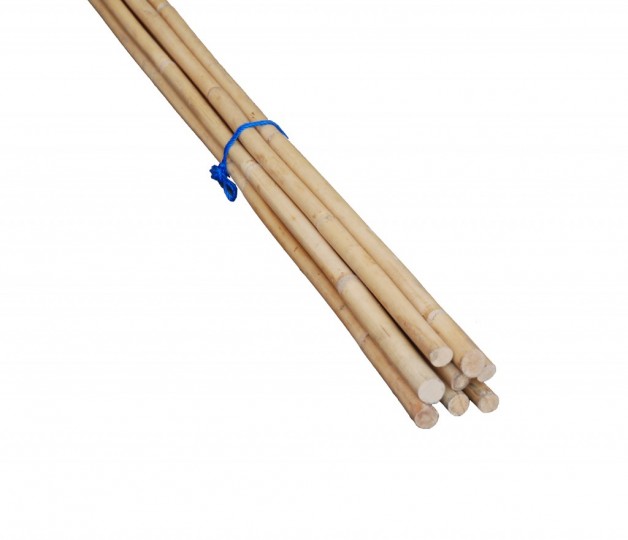 The most basic form of rattan pole, supplied with the natural bark fully intact and no surface cleaning applied. The poles retain their original texture, color variation, and node structure. This grade is preferred by buyers who process rattan in-house — running their own cleaning, peeling, or treatment operations — and who want the most cost-effective unprocessed input material.
Raw rattan poles are available in diameters from 6mm to 45mm and lengths of 4.5–5.5 meters.
Cleaned Rattan Pole (Cây Mây Thô Đã Làm Sạch)
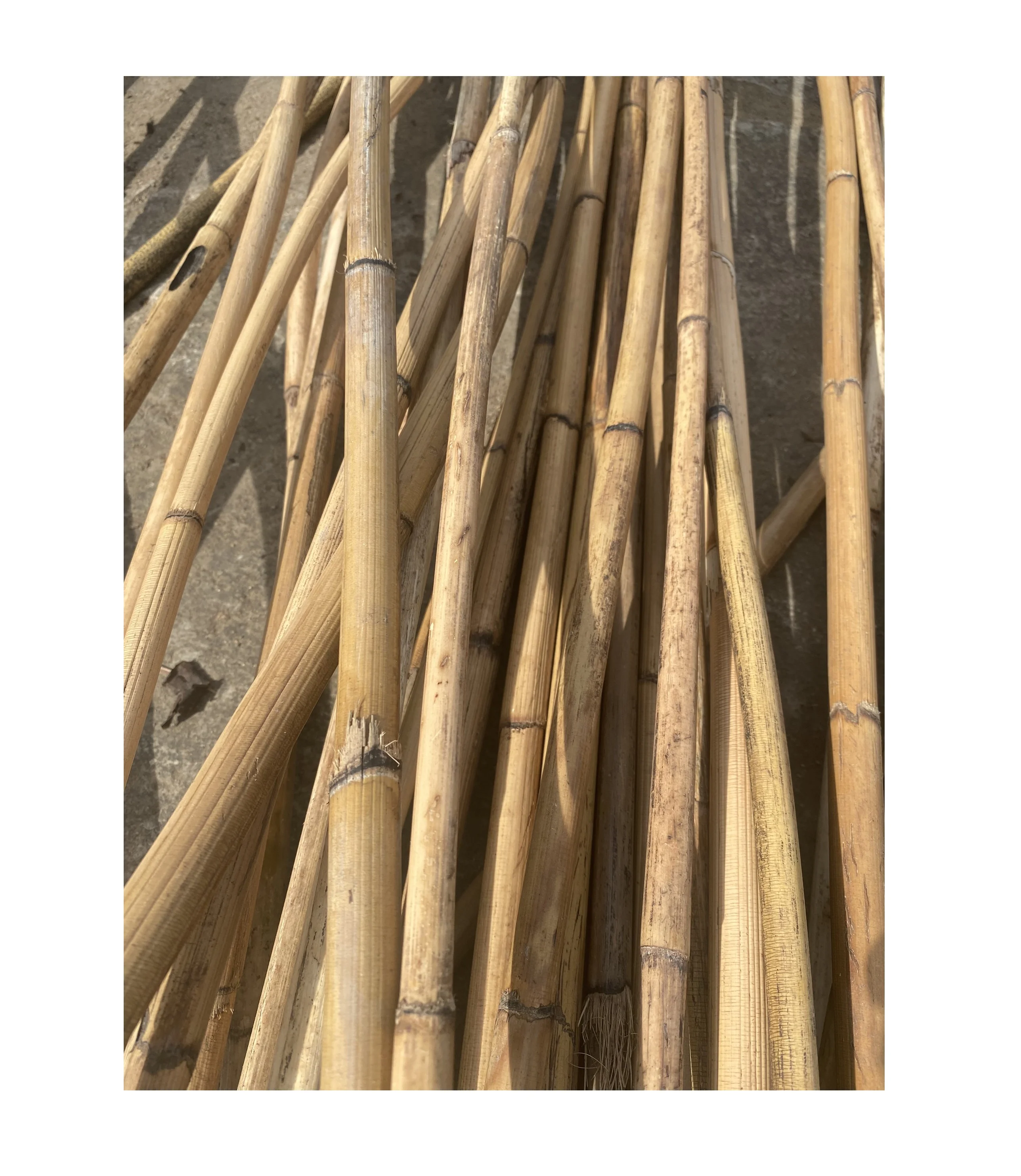 Surface-cleaned poles with the natural bark retained but dirt, loose debris, and surface contamination removed. The cleaning process reveals the natural golden-to-tan color of the outer bark, producing a noticeably more uniform and visually appealing pole that is easier to handle directly in production.
Cleaned rattan poles are among the most widely exported grades from Vietnam, serving furniture and handicraft manufacturers across Europe, North America, Japan, and the Middle East. Available in diameters 6–45mm, lengths 4.5–5.5 meters.
Node-Trimmed Rattan Pole (Cây Mây Thô Làm Sạch Góc Mắc)
 A premium step above cleaned poles — the natural joints (nodes) running along the length of the pole are trimmed and smoothed flush with the pole surface. The result is a significantly smoother, more elegant pole with a consistent profile along its entire length.
Smooth nodes make the pole easier to bend, wrap, and assemble, and reduce the risk of snagging during production. This grade is particularly favored by European and Japanese furniture manufacturers who require higher finishing standards and want to minimize manual preparation time on the factory floor. Available in diameters 6–45mm, lengths 4.5–5.5 meters.
Bark-Peeled Polished Rattan Pole (Cây Mây Chà Vỏ)
 The highest-processed form of whole rattan pole. The outer bark is completely removed using a peeling machine, exposing the inner core material and producing a uniformly smooth, pale ivory-to-cream colored surface. Each pole is then machine-polished for a consistent diameter and finish across the batch.
Removing the bark transforms the pole's workability and appearance. The clean, bright surface accepts stains, lacquers, paints, and coatings with far greater consistency than barked poles, making this grade the standard choice for premium furniture lines and export-quality handicrafts where surface finishing is part of the production process.
Available in two configurations: small diameter under 30mm at lengths of 2.5–5.5 meters, and large diameter over 30mm at lengths of 4.5–5.5 meters.
Large Diameter Rattan Pole — Mây Tàu (Cây Mây Tàu)
A distinct rattan grade in its own category. Mây Tàu poles are significantly larger in diameter than standard rattan — ranging from 40mm to 65mm — and provide a level of structural strength that smaller grades cannot match. These poles are the preferred choice for heavy-duty furniture frames including large sofas, beds, outdoor furniture, and load-bearing shelving units.
Mây Tàu is also increasingly used in resort and hospitality interior design, garden furniture, and architectural accent applications where the bold natural aesthetic of thick rattan poles is part of the design language. Available in lengths of 3.8–4.2 meters.
Key Applications of Rattan Poles
The natural combination of strength, flexibility, and aesthetic warmth makes rattan poles one of the most versatile natural materials in global manufacturing.
Furniture manufacturing is by far the largest application category. Rattan poles serve as the structural frame material in sofas, armchairs, dining chairs, lounge chairs, beds, wardrobes, shelving units, and side tables. Depending on the furniture design, manufacturers may use a single grade throughout or combine grades — for example, large diameter poles for main structural frames and bark-peeled polished poles for exposed decorative elements.
Handicraft and home décor production uses rattan poles extensively for decorative baskets, lamp bases, mirror frames, wall décor, and small furniture accessories. The natural texture and warm color of rattan makes it a consistently popular material in the global home décor market, particularly in the bohemian, coastal, and natural interior design segments.
Garden and outdoor furniture increasingly uses rattan poles — particularly Mây Tàu — for outdoor lounge sets, sunbeds, and pergola accent pieces, valued for their natural weather resistance when properly treated and finished.
Construction and structural supports represent a smaller but growing application area, particularly in traditional and eco-architecture projects in Asia and Europe where rattan poles are used as scaffolding, structural supports, and decorative cladding elements.
Why Source Rattan Poles from Vietnam?
Vietnam's position as a leading rattan pole exporter is built on a combination of factors that are difficult for competing origins to match simultaneously.
The country's northern highland regions produce rattan with naturally high fiber density and consistent flexibility — a result of growing conditions that favor quality material over fast-growth volume. Vietnamese rattan poles are well-regarded among international buyers for their durability and workability compared to lower-grade material from other origins.
Vietnam's rattan processing industry is mature and export-oriented, with suppliers experienced in working to international quality standards, precise diameter grading, and buyer-specified custom processing requirements. Custom lengths, specific diameter ranges, and mixed-grade orders are routinely accommodated.
Supply reliability is a significant advantage. Vietnamese rattan is available year-round without seasonal gaps, and the country's port infrastructure supports efficient container loading for both 20ft and 40HC shipments. Standard packing is 25kg or 50kg per PP woven bag, with container loads of 6.5–7 tons per 20ft and 16 tons per 40HC.
For price-sensitive buyers, Vietnam offers strong value across all processing grades — particularly for cleaned, node-trimmed, and bark-peeled poles where Vietnamese processors have significant efficiency advantages built on decades of production experience.
What to Check Before Placing a Rattan Pole Order
For buyers new to sourcing rattan poles, or those looking to tighten their quality requirements with an existing supplier, these are the most important factors to verify:
Diameter grading accuracy directly affects how poles perform in production. Inconsistent diameters cause fit problems in joinery, uneven bending, and increased waste. Always confirm the diameter tolerance your supplier works to and request a sample batch before committing to full container orders.
Moisture content after drying determines workability and shelf life. Properly dried poles should feel firm and slightly flexible but not brittle or damp. Excess moisture is the leading cause of mold development during shipping, particularly on long ocean freight routes.
Node trimming quality on trimmed grades should be inspected carefully — nodes trimmed unevenly or incompletely create surface irregularities that cause problems during bending and finishing.
Chemical treatment documentation — particularly for markets with phytosanitary requirements such as the EU, USA, Australia, and Japan — should be confirmed with your supplier before shipment. Ensure that the anti-termite and anti-mold treatment used is compliant with your destination market's import regulations.
Ready to Source Vietnam Rattan Poles?
Vietnam offers the quality, consistency, grade variety, and supply reliability that furniture manufacturers and handicraft importers need from a long-term rattan pole supplier.
We supply all five grades of Vietnamese rattan poles — raw unpeeled, cleaned, node-trimmed, bark-peeled polished, and large diameter Mây Tàu — in diameters from 6mm to 65mm, packed and container-ready year-round.
If this fits what you're looking for — or you just want to request samples first — reach out directly:
📱 WhatsApp: +84 52 373 4193 ✉️ Email: info@itxeasy.com 🌐 itxeasy.com
Tags: Rattan Pole, Vietnam Rattan, Raw Rattan, Cleaned Rattan, Node Trimmed Rattan, Bark Peeled Rattan, Large Diameter Rattan, Mây Tàu, Rattan Wholesale, Rattan Export, Rattan Supplier, Furniture Material, Handicraft Material, Rattan Raw Material, Sourcing Guide, B2B Rattan
Latest

DRIED EUCHEUMA SEAWEED
🌿 PRODUCT DESCRIPTION Dried Eucheuma Seaweed is produced from the fresh body of high-quality red ..

Frozen Gac Fruit Flesh
Frozen Gac Fruit Flesh is made from the fresh red membrane of ripe Gac fruit (Momordica cochinchinen..

DRIED SOURSOP LEAVES
SOURCE DRIED SOURSOP LEAVES FROM VIETNAM Dried Soursop Leaves are made from carefully selected fr..

Freeze-Dried Pandan Leaf Powder
Freeze-Dried Pandan Leaf Powder — Natural. Aromatic. Vibrant. Our freeze-dried pandan leaf powder..

CUTTLEFISH BONE (CUTTLEBONE)
Cuttlefish bone (also known as cuttlebone) is the internal hard shell of cuttlefish, with a natural ..

Processed Pineapple Leaf Fiber
Processed Pineapple Leaf Fiber (PALF) – Sustainable & High-Value Material Our processed pinea..

Eco-Friendly Pineapple Enzyme Dishwashing Liquid
Eco-Friendly Pineapple Enzyme Dishwashing Liquid – Natural & Sustainable Cleaning Our pineapp..

Anchovy Fish Sauce
Premium Anchovy Fish Sauce – Traditional Fermented Flavor from Vietnam Our premium anchovy fish s..

Dried Bitter Melon Vine (Dây Khổ Qua Khô)
Dried bitter melon vine (Momordica charantia) is a time-honored herbal remedy in traditional Vietnam..

Premium Terracotta Pottery from Vietnam – Handmade Natural Clay Products for Europe
Premium Terracotta Pottery – Natural Handmade Clay Products Our premium terracotta pottery from V..

Vietnamese Natural Ramie Leaves Powder (Bot La Gai Den)
Introduce your products to the authentic taste and color of Vietnam with ITXEasy's Natural Ramie Lea..

Vietnamese Boiled Sweet Potato — Nature's Most Honest Snack
Vietnamese Boiled Sweet Potato — Nature's Most Honest Snack No seasoning. No packaging. No brandi..