
What Are Vietnamese Fried Fish Balls – And How Are They Different from Asian Fish Balls?
By Chi itxeasy - 13/03/2026 - 0 comments
The Asian Fish Ball Confusion Is Real
Walk into any Asian grocery store in Europe and you will find a freezer section full of products labeled "fish balls" — some from Thailand, some from China, some from Malaysia, some from Vietnam. They look broadly similar. They are all made from fish. They are all round or roughly spherical. And yet anyone who has eaten their way across Southeast Asian street food culture knows that these products are not interchangeable — the texture, flavor, fish species, seasoning philosophy, and culinary application of fish balls varies significantly from country to country and tradition to tradition.
For European food buyers, importers, and restaurant operators building Asian food ranges or sourcing ingredients for pan-Asian menus, understanding these differences is not a minor detail. It is the foundation of making coherent sourcing decisions, accurate product descriptions, and credible culinary claims.
This guide focuses specifically on Vietnamese fried fish balls — what makes them distinctive, how they differ from the fish ball traditions of Thailand, China, and Malaysia, and why that distinction matters for buyers and operators in European markets.
A Brief Map of Asian Fish Ball Traditions
Before getting into the specifics of Vietnamese fried fish balls, it helps to understand the broader landscape of fish ball traditions across Asia — because the differences between them are rooted in genuinely distinct culinary philosophies, not just minor recipe variations.
Chinese fish balls are the most widely distributed Asian fish ball variety in global markets, largely due to the extensive reach of Chinese diaspora communities and the scale of Chinese food manufacturing. Chinese-style fish balls — particularly the Cantonese variety — are typically smooth, pale, and very bouncy in texture, produced from white-fleshed fish paste processed to a very fine consistency. They are designed primarily for use in soups, hot pot, and noodle dishes, where their neutral flavor and springy texture complement rich broths. They are almost always boiled or simmered rather than fried.
Thai fish balls share some characteristics with Chinese varieties — the smooth texture, the pale color, the hot pot and noodle soup application — but are typically seasoned with lemongrass, kaffir lime leaf, and other aromatics that give them a distinctly Southeast Asian flavor profile. Thai fish balls are a staple of street food culture — served on skewers with sweet chili sauce — and are among the most recognizable fish ball formats in global Asian food retail.
Malaysian fish balls reflect the multicultural food heritage of Malaysian cuisine — influenced by Chinese, Malay, and Indian culinary traditions. Malaysian varieties tend toward a firmer texture than Chinese fish balls, with regional variations that include both smooth and more coarsely textured formats depending on the fish species and regional tradition.
Vietnamese fried fish balls (chả cá chiên) occupy a distinctive position in this landscape — different in species, texture philosophy, preparation method, and culinary application from all of the above.
What Makes Vietnamese Fried Fish Balls Different
The Fish Species — Starting From a Different Ingredient
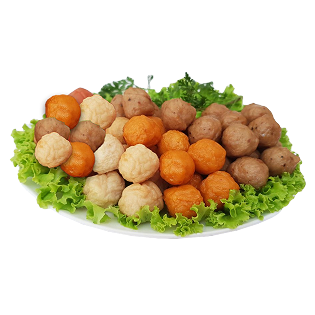 The most fundamental difference between Vietnamese fried fish balls and most other Asian fish ball traditions begins with the fish itself.
While Chinese, Thai, and Malaysian fish balls are typically produced from white-fleshed marine fish — pike fish, pollock, or generic white fish paste — Vietnamese fish ball tradition has historically centered on specific freshwater and coastal species that Vietnamese cooks prize for particular textural properties.
The most prestigious and distinctive Vietnamese fish used in premium chả cá is the featherback fish (cá thác lác) — a freshwater species valued across Vietnamese culinary culture for its naturally springy, chewy flesh and its ability to produce a fish paste with exceptional elasticity and bite. Featherback fish paste produces a fish cake or ball with a texture that is distinctly firmer and chewier than standard white fish paste products — and with a cleaner, more delicate flavor that Vietnamese cooks describe as free from the "fishy" smell that characterizes lower-quality fish paste products.
This species specificity is part of what defines authentic Vietnamese fish ball quality — and it is a meaningful point of differentiation for buyers sourcing premium Vietnamese fish products versus generic Asian fish ball alternatives.
Fried, Not Boiled — A Fundamental Preparation Difference
The second major distinction is in the preparation method — and it is signaled right in the name.
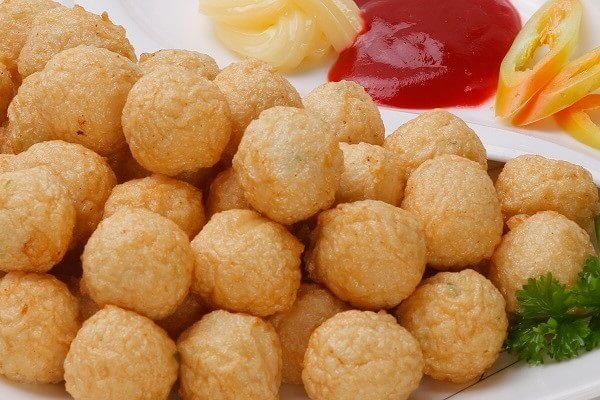
Vietnamese fried fish balls (chả cá chiên) are pre-fried as part of their production process — giving them a golden exterior crust that Chinese and Thai boiled fish balls do not have. This frying step does several things simultaneously: it creates a textural contrast between the slightly crispy outer surface and the chewy, springy interior; it develops a more complex flavor through Maillard reaction browning; and it produces a product that holds its structure and texture better through subsequent cooking — whether reheating by frying, grilling, adding to soups, or using in stir-fry applications.
The pre-fried format also gives Vietnamese fish balls a visual distinctiveness — the golden-brown exterior immediately communicates a different product from the pale, smooth surface of Chinese or Thai boiled fish balls — which matters for retail shelf differentiation and menu presentation.
Texture Philosophy — Chewiness as a Quality Marker
Vietnamese fish ball tradition places enormous value on what Vietnamese food culture describes as dai — a quality of chewiness and springy resistance that is considered a mark of quality and freshness in fish paste products. A good Vietnamese fish ball should push back against the bite, releasing its flavor gradually as the chew develops, rather than collapsing immediately like a softer, more finely processed product.
This texture philosophy reflects the influence of featherback fish's natural properties — its flesh produces a paste with exceptional protein network formation that delivers the dai quality Vietnamese consumers prize. It is a fundamentally different texture target from the smoothness-focused approach of Chinese fish ball production, and it produces a product that performs differently in cooking — holding up better to high-heat applications, maintaining integrity in soups and hot pots through extended simmering, and providing a more satisfying eating experience in direct snacking applications.
Seasoning — Clean and Restrained
 Vietnamese fish ball seasoning philosophy tends toward restraint compared to the more aromatic Thai tradition or the more heavily processed Chinese commercial varieties. Authentic Vietnamese chả cá relies on the natural flavor of the fish itself — enhanced with minimal seasoning — rather than masking the fish flavor behind strong aromatics or artificial flavor enhancers.
This clean seasoning approach makes Vietnamese fried fish balls a more versatile culinary ingredient — their neutral-to-delicate flavor profile allows them to take on the character of whatever sauce, broth, or seasoning they are cooked with, rather than competing with other flavor elements in a dish.
How Vietnamese Fried Fish Balls Are Used — Culinary Applications
The pre-fried format and chewy texture of Vietnamese fish balls make them suitable for a broader range of culinary applications than their boiled counterparts:
Hot pot and steamboat — a natural application where the fish balls' structural integrity allows them to simmer in rich broths without breaking down, absorbing flavor while maintaining their chewy texture.
Noodle soups — added to Vietnamese bún noodle soups, hủ tiếu, and other broth-based noodle dishes as a protein component with textural contrast.
Stir-fry and wok dishes — the pre-fried exterior stands up to high-heat wok cooking better than boiled fish balls, making Vietnamese fish balls suitable for stir-fry applications with vegetables and sauces.
Direct frying and grilling — reheated by deep-frying or pan-frying for a fully crispy exterior, served as a snack or appetizer with dipping sauces.
Asian fusion applications — the clean flavor and distinctive chewy texture make Vietnamese fried fish balls a compelling ingredient for fusion dishes, salads, and creative Asian-inflected menu items in European restaurant contexts.
Why This Matters for European Buyers and Operators
For European food importers, Asian grocery retailers, and restaurant operators, the distinction between Vietnamese fried fish balls and generic Asian fish balls has practical commercial implications.
Product differentiation on shelf — in a freezer category dominated by Chinese and Thai fish ball products, Vietnamese fried fish balls offer a genuinely distinctive alternative — different appearance, different texture, different flavor story — that gives consumers a reason to try something new and gives retailers a point of differentiation in their Asian frozen food range.
Menu authenticity — for Vietnamese restaurants and pan-Asian food service operators, sourcing authentic Vietnamese-style fish balls rather than substituting Chinese or Thai alternatives is a matter of culinary credibility. Customers with Vietnamese food familiarity will notice the difference.
Premium positioning — the featherback fish origin, the pre-fried preparation, and the dai texture philosophy of authentic Vietnamese fish balls support a premium positioning relative to commodity fish ball products — relevant for specialty food retail and upmarket food service contexts.
Contact and Inquiry
For wholesale, retail, and food service sourcing inquiries about Vietnamese frozen seafood products:
- WhatsApp: +84 52 373 4193
- Email: info@itxeasy.com
- Website: www.itxeasy.com
Wholesale and retail packaging available. Sample requests welcome.
Tags: Vietnamese fish balls, fried fish balls, chả cá chiên, Asian fish balls, featherback fish, fish ball comparison, Vietnamese frozen seafood, Asian frozen food Europe, fish ball wholesale, restaurant ingredient, hot pot ingredient, noodle soup ingredient, Vietnamese street food, Asian grocery retail, frozen seafood import, Vietnamese food export, dai texture, clean label seafood, premium fish balls, food service ingredient
Latest

DRIED EUCHEUMA SEAWEED
🌿 PRODUCT DESCRIPTION Dried Eucheuma Seaweed is produced from the fresh body of high-quality red ..

Frozen Gac Fruit Flesh
Frozen Gac Fruit Flesh is made from the fresh red membrane of ripe Gac fruit (Momordica cochinchinen..

DRIED SOURSOP LEAVES
SOURCE DRIED SOURSOP LEAVES FROM VIETNAM Dried Soursop Leaves are made from carefully selected fr..

Freeze-Dried Pandan Leaf Powder
Freeze-Dried Pandan Leaf Powder — Natural. Aromatic. Vibrant. Our freeze-dried pandan leaf powder..

CUTTLEFISH BONE (CUTTLEBONE)
Cuttlefish bone (also known as cuttlebone) is the internal hard shell of cuttlefish, with a natural ..

Processed Pineapple Leaf Fiber
Processed Pineapple Leaf Fiber (PALF) – Sustainable & High-Value Material Our processed pinea..

Eco-Friendly Pineapple Enzyme Dishwashing Liquid
Eco-Friendly Pineapple Enzyme Dishwashing Liquid – Natural & Sustainable Cleaning Our pineapp..

Anchovy Fish Sauce
Premium Anchovy Fish Sauce – Traditional Fermented Flavor from Vietnam Our premium anchovy fish s..

Dried Bitter Melon Vine (Dây Khổ Qua Khô)
Dried bitter melon vine (Momordica charantia) is a time-honored herbal remedy in traditional Vietnam..

Premium Terracotta Pottery from Vietnam – Handmade Natural Clay Products for Europe
Premium Terracotta Pottery – Natural Handmade Clay Products Our premium terracotta pottery from V..

Vietnamese Natural Ramie Leaves Powder (Bot La Gai Den)
Introduce your products to the authentic taste and color of Vietnam with ITXEasy's Natural Ramie Lea..

Vietnamese Boiled Sweet Potato — Nature's Most Honest Snack
Vietnamese Boiled Sweet Potato — Nature's Most Honest Snack No seasoning. No packaging. No brandi..