
Can Rice Husk Ash Replace Fly Ash in Green Building Projects?
By Chi itxeasy - 13/03/2026 - 0 comments
Green Building Has a Material Problem
The construction industry is under more pressure to decarbonize than at any point in its history. Net-zero building commitments, embodied carbon regulations, green certification requirements, and ESG procurement policies are reshaping how engineers, architects, and material buyers evaluate every input that goes into a structure — from the steel in the frame to the binder in the concrete.
Concrete is where the conversation gets most urgent. Portland cement — the foundational binder in virtually all concrete — is one of the most carbon-intensive manufactured materials on earth, responsible for approximately 8% of global CO₂ emissions annually. The most commercially proven strategy for reducing cement's carbon footprint without compromising structural performance is partial cement replacement with supplementary cementitious materials (SCMs) — materials that react with cement chemistry to contribute to concrete strength and durability while displacing a portion of the high-carbon Portland clinker.
Fly ash has been the dominant SCM in global construction for decades. Cheap, widely available as a coal combustion byproduct, and technically well-understood, it has become the default cement replacement material for green building projects worldwide.
But fly ash has a problem that is becoming impossible to ignore — and it is creating a significant opening for activated rice husk ash as a credible, high-performance alternative.
The Fly Ash Supply Problem Nobody Is Talking About Loudly Enough
Fly ash is a byproduct of coal-fired power generation. Its abundance — and its low cost — has always been directly tied to how much coal is being burned globally.
As the global energy transition accelerates and coal power plants are retired across Europe, North America, and increasingly in Asia, fly ash supply is tightening. In markets where green building regulations are most stringent — precisely the markets where SCM demand is growing fastest — coal power is declining most rapidly.
The result is a structural supply contradiction: the green building sector's most widely used low-carbon concrete additive is becoming scarcer precisely because the world is successfully decarbonizing its energy supply. Markets that have built concrete specifications around fly ash availability are beginning to face genuine supply uncertainty — and forward-thinking material buyers are already looking for alternatives.
There is a second problem with fly ash that rarely makes it into procurement conversations but matters significantly for project certifications and ESG reporting: quality consistency. Fly ash quality varies considerably depending on the coal source and combustion conditions of the power plant it comes from. Heavy metal contamination — including arsenic, mercury, lead, and cadmium — is a documented concern with certain fly ash sources, creating regulatory complications in markets with strict construction material safety standards.
For green building projects pursuing LEED, BREEAM, or equivalent certifications, material transparency and contamination-free sourcing are increasingly non-negotiable requirements.
What Is Activated Rice Husk Ash — And Why Does It Perform?
 Activated Rice Husk Ash (RHA) is produced from the controlled thermal combustion of rice husk — the outer shell that is removed from rice grains during milling. Rice husk is essentially pure lignocellulosic biomass — organic plant material with no heavy metal content, no toxic byproducts, and no coal combustion chemistry involved at any stage of its production.
When rice husk is burned at a precisely controlled temperature — typically between 500°C and 700°C — the organic components combust completely while the naturally high silica content of the husk is converted into highly reactive amorphous silicon dioxide (SiO₂). This amorphous silica, with a content typically ranging from 85% to 95% depending on processing quality, is the active ingredient that gives RHA its pozzolanic performance.
Pozzolanic reactivity — the ability to react with calcium hydroxide released during cement hydration to form additional cementitious compounds — is what makes both fly ash and RHA valuable as SCMs. The higher the amorphous silica content and the finer the particle size, the more reactive the material and the greater its contribution to concrete strength and durability.
Here is where activated RHA has a genuine technical advantage over standard fly ash: its amorphous silica content is significantly higher. While Class F fly ash typically contains 50–70% combined silica, alumina, and iron oxide, high-quality activated RHA delivers 85–95% reactive amorphous silica — a substantially more concentrated pozzolanic ingredient.
Head-to-Head Technical Comparison
| Property | Class F Fly Ash | Activated Rice Husk Ash |
|---|---|---|
| Primary active component | Silica + alumina + iron oxide | Reactive amorphous silica (SiO₂) |
| Silica content | 50–70% combined oxides | 85–95% amorphous SiO₂ |
| Pozzolanic reactivity | Moderate | High to very high |
| Particle size | Typically 1–100 microns | Fine – controllable through processing |
| Color effect on concrete | Grey to light grey | Light grey to off-white |
| Heavy metal risk | Present in some sources | None – clean agricultural origin |
| Carbon footprint of production | Coal combustion byproduct | Agricultural biomass byproduct |
| Supply dependency | Coal power generation | Rice milling – stable agricultural cycle |
| Consistency | Variable by source | Controllable through processing |
| Replacement rate in concrete | Typically 15–30% of cement | Typically 10–20% of cement |
| Effect on workability | Generally improves workability | May require water adjustment |
| Strength development | Good long-term strength gain | Excellent long-term strength gain |
| Durability benefits | Good chloride resistance | Excellent – reduced permeability |
Where RHA Outperforms Fly Ash
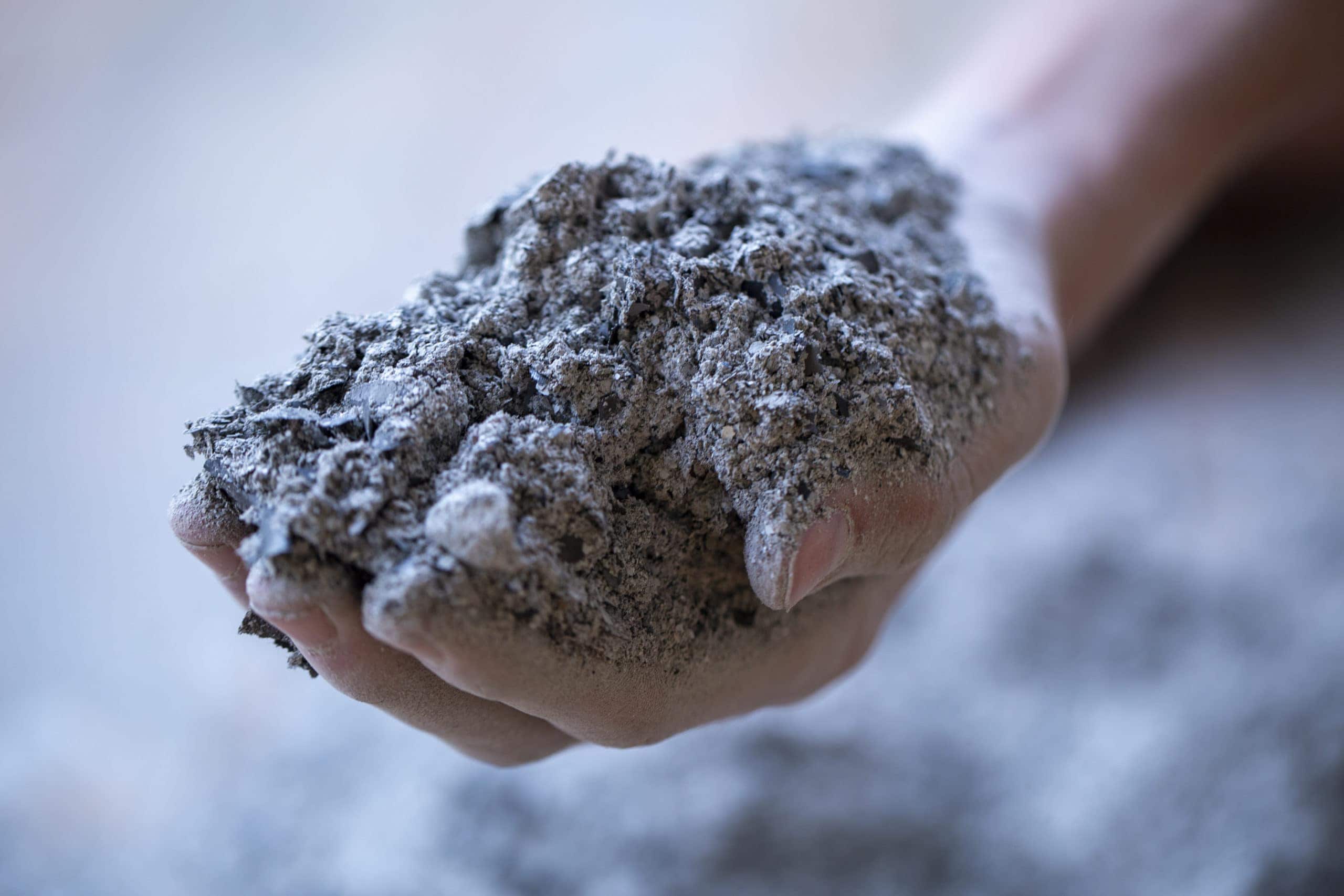 Compressive strength at higher replacement rates — the high amorphous silica content of activated RHA delivers superior pozzolanic reactivity compared to standard fly ash, contributing to greater long-term compressive strength gains in concrete, particularly at 28-day and 90-day testing intervals.
Durability and permeability reduction — RHA concrete consistently demonstrates reduced permeability compared to fly ash concrete at equivalent replacement rates. In infrastructure applications exposed to aggressive environments — marine structures, bridge decks, water treatment facilities, underground construction — this durability advantage has significant long-term value.
Zero heavy metal contamination risk — rice husk is agricultural biomass. It contains no coal combustion byproducts, no heavy metals, and no toxic trace elements. For projects requiring full material transparency and contamination-free certification, this clean origin profile is a meaningful advantage over fly ash from variable industrial sources.
Supply chain independence from coal — RHA supply is tied to rice production, not coal combustion. As the world's leading rice-producing regions — including Vietnam, India, China, Thailand, and Indonesia — maintain stable agricultural output, RHA supply remains predictable and independent of energy sector transitions.
Green certification compatibility — the agricultural circular economy story of RHA — converting rice milling waste into high-performance construction material — resonates strongly with LEED, BREEAM, and other green building certification frameworks that reward material transparency, recycled content, and low embodied carbon.
Where Fly Ash Still Has Practical Advantages
Honest technical comparison requires acknowledging where fly ash retains practical advantages for certain project contexts.
Lower replacement cost in markets with abundant supply — in regions where coal power remains active and fly ash supply is plentiful, the raw material cost of fly ash is very low. RHA carries a production cost that reflects the processing required to achieve consistent quality and high silica content.
Established specification history — fly ash has decades of documented performance data, standardized testing protocols (ASTM C618, EN 450), and deep familiarity among structural engineers and concrete specifiers. RHA specifications are less universally standardized, which can create friction in markets where engineers are conservative about adopting less-familiar materials.
Workability in high-volume applications — fly ash's spherical particle morphology improves concrete workability, making it popular in high-volume placements. RHA's irregular particle shape requires mix design adjustment to achieve equivalent workability.
The Verdict for Green Building Projects
For green building projects where material transparency, contamination-free sourcing, supply chain resilience, and high-performance durability are priority requirements — and where engineering teams are open to a material with a compelling and growing performance track record — activated rice husk ash is not merely a viable fly ash alternative. In several performance dimensions it is a technically superior choice.
For projects in markets where fly ash supply is tightening due to coal phase-out, RHA represents a future-proof sourcing strategy that decouples concrete performance from energy sector volatility.
The most forward-thinking construction material buyers are not waiting for fly ash supply problems to become acute before evaluating alternatives. They are building RHA into specification portfolios now — establishing technical familiarity, supplier relationships, and project performance data while the transition window is still on their terms rather than being forced by supply constraints.
Vietnam — as one of the world's top rice-producing nations — is positioned as a cost-competitive, high-volume, and supply-stable source for premium activated RHA. ITX Easy supplies export-grade activated rice husk ash with consistent silica specifications, full technical documentation, and reliable supply capacity for construction material buyers worldwide.
Contact and Inquiry
Our team is ready to assist with technical data sheets, product specifications, pricing, and shipping documentation.
- WhatsApp: +84 52 373 4193
- Email: info@itxeasy.com
- Website: www.itxeasy.com
Bulk supply, custom silica specifications, and technical documentation including Certificate of Analysis available upon request.
Tags: rice husk ash, fly ash alternative, activated RHA, green building material, supplementary cementitious material, SCM comparison, sustainable concrete, pozzolanic material, LEED material, low carbon concrete, construction material sourcing, fly ash shortage, amorphous silica construction, Vietnam RHA export, circular economy construction, embodied carbon concrete, green building 2026, concrete admixture, cement replacement, construction buyer guide
Latest

Frozen Gac Fruit Flesh
Frozen Gac Fruit Flesh is made from the fresh red membrane of ripe Gac fruit (Momordica cochinchinen..

DRIED SOURSOP LEAVES
SOURCE DRIED SOURSOP LEAVES FROM VIETNAM Dried Soursop Leaves are made from carefully selected fr..

Freeze-Dried Pandan Leaf Powder
Freeze-Dried Pandan Leaf Powder — Natural. Aromatic. Vibrant. Our freeze-dried pandan leaf powder..

CUTTLEFISH BONE (CUTTLEBONE)
Cuttlefish bone (also known as cuttlebone) is the internal hard shell of cuttlefish, with a natural ..

Processed Pineapple Leaf Fiber
Processed Pineapple Leaf Fiber (PALF) – Sustainable & High-Value Material Our processed pinea..

Eco-Friendly Pineapple Enzyme Dishwashing Liquid
Eco-Friendly Pineapple Enzyme Dishwashing Liquid – Natural & Sustainable Cleaning Our pineapp..

Anchovy Fish Sauce
Premium Anchovy Fish Sauce – Traditional Fermented Flavor from Vietnam Our premium anchovy fish s..

Dried Bitter Melon Vine (Dây Khổ Qua Khô)
Dried bitter melon vine (Momordica charantia) is a time-honored herbal remedy in traditional Vietnam..

Premium Terracotta Pottery from Vietnam – Handmade Natural Clay Products for Europe
Premium Terracotta Pottery – Natural Handmade Clay Products Our premium terracotta pottery from V..

Vietnamese Natural Ramie Leaves Powder (Bot La Gai Den)
Introduce your products to the authentic taste and color of Vietnam with ITXEasy's Natural Ramie Lea..

Vietnamese Boiled Sweet Potato — Nature's Most Honest Snack
Vietnamese Boiled Sweet Potato — Nature's Most Honest Snack No seasoning. No packaging. No brandi..

Boi Loi Powder (Red Glue Wood Powder) — Premium Natural Binder from Vietnam
Boi Loi Powder, also known commercially as Red Glue Wood Powder (bot keo do), is a finely milled nat..