
10 Ways European Food Lovers Can Enjoy Vietnamese Soft Rice Paper – From Traditional to Surprisingly Creative
By Chi itxeasy - 13/03/2026 - 0 comments
The Rice Paper You Have Never Tried — Until Now
 Most Europeans who have encountered Vietnamese food in restaurants are familiar with fresh spring rolls — those translucent, delicate cylinders of soaked rice paper wrapped around vegetables, herbs, and prawns, served with a dipping sauce. It is a beautiful dish. But it represents only one narrow application of what rice paper can do — and it requires the dried, soakable variety, not the soft rice paper we are talking about here.
Vietnamese Soft Rice Paper (bánh tráng mềm) is an entirely different product. It does not need soaking. It does not need cooking. It comes soft, pliable, and ready to eat straight from the pack — with a naturally chewy texture, a clean subtle rice aroma, and a neutral flavor base that makes it one of the most versatile snack ingredients in Vietnamese street food culture.
In Vietnam, eating soft rice paper is an everyday ritual — at school gates, street-side stalls, night markets, and kitchen tables across the country. Torn into pieces and tossed with chili salt, dried shrimp, and a squeeze of lime, it is the kind of snack that is simultaneously humble and completely addictive.
For European food lovers — increasingly adventurous, increasingly curious about Asian food culture beyond restaurant interpretations — soft rice paper is a genuinely exciting discovery. Here are ten ways to enjoy it, from the most traditional Vietnamese approach to the most unexpected creative applications.
1. The Classic Vietnamese Street Style — Chili Salt and Lime
 Start where Vietnam starts. Tear the soft rice paper into irregular pieces, dust generously with chili salt (muối ớt), and finish with a squeeze of fresh lime. That is it. No cooking, no preparation, no recipe required.
The combination sounds almost too simple to be interesting — and yet it is the version that Vietnamese people return to again and again, because the interplay between the chewy rice paper, the sharp citrus hit, and the slow burn of chili salt creates a snacking experience that is genuinely difficult to stop eating.
For European palates new to the format, this is the best starting point. It establishes what soft rice paper tastes like on its own terms before layering on more complex flavors.
What to use: Fine sea salt mixed with dried chili flakes, or a Vietnamese chili salt blend if available at Asian grocery stores. Fresh lime is non-negotiable — bottled lime juice does not deliver the same brightness.
2. With Fermented Shrimp Paste — The Authentic Saigon Combination
 In Ho Chi Minh City, the definitive soft rice paper combination adds fermented shrimp paste (mắm ruốc) to the chili salt and lime base — a deeply savory, intensely umami condiment that transforms the snack into something considerably more complex and polarizing.
This is not a flavor introduction for the timid. Fermented shrimp paste has a pungent, funky aroma that rewards those willing to move past the first impression. For European food lovers who enjoy strong cheeses, anchovies, or fermented foods of any kind, the leap is smaller than it might initially appear — and the payoff is a genuinely authentic Saigon street food experience.
Mắm ruốc is available at most Asian grocery stores across major European cities. A small amount goes a long way — start cautiously and adjust to taste.
3. As a Cheese and Charcuterie Board Addition
 Here is where things start to get creative — and surprisingly logical.
Soft rice paper's neutral flavor, distinctive chewiness, and visually interesting texture make it a compelling addition to European cheese and charcuterie boards. Replace or supplement conventional crackers and breadsticks with torn pieces of soft rice paper — the texture contrast against aged cheeses, cured meats, and pickled accompaniments is genuinely interesting.
The slight sweetness of the rice pairs particularly well with aged hard cheeses — Comté, Manchego, aged Gouda — and with cured meats that have a natural sweetness of their own, like bresaola or mild prosciutto. Add a small dish of chili flakes and flaky sea salt on the side for guests who want to explore the Vietnamese direction.
This format works beautifully for entertaining — it introduces an unfamiliar ingredient in a completely accessible context, and it almost always generates conversation.
4. Topped With Avocado, Sesame, and Soy
The soft rice paper functions brilliantly as a base for simple toppings in a format that European food culture will immediately recognize — essentially an open-faced snack or light appetizer.
Lay pieces of soft rice paper flat and top with sliced ripe avocado, a drizzle of soy sauce, toasted sesame seeds, and a few drops of sesame oil. Finish with chili flakes if desired. The combination is clean, satisfying, and requires about ninety seconds of preparation.
The chewy rice paper base provides textural contrast to the creamy avocado in a way that toast or crackers cannot replicate — and the natural rice flavor is neutral enough to let the sesame and soy do their work without competition.
5. The Bánh Tráng Trộn Style — Mixed and Tossed
 Bánh tráng trộn — mixed rice paper — is the next evolutionary step from plain soft rice paper in Vietnamese street food culture, and one of the most popular snack formats among young Vietnamese consumers today.
Cut or tear soft rice paper into strips, then toss with a combination of dried shrimp, quail eggs, Vietnamese beef jerky (bò khô), green mango strips, roasted peanuts, spring onion oil, and chili sauce. The result is a textured, layered snack with multiple flavor dimensions operating simultaneously — savory, sweet, spicy, sour, and umami all present in a single handful.
For European food lovers interested in experiencing Vietnamese snack culture at its most vibrant and contemporary, bánh tráng trộn is the format to explore. Many of the ingredients are available at Asian grocery stores across Europe — and the assembly is improvisational enough to accommodate whatever combination appeals.
6. As a Wrap for Fresh Herbs and Vegetables
Soft rice paper's pliability makes it a natural wrap material — not in the soaked spring roll format, but as a hand-held, untreated wrap that holds fillings with satisfying structural integrity.
Layer fresh herbs — mint, coriander, basil — with thinly sliced cucumber, pickled vegetables, and whatever protein is to hand. Roll loosely and eat immediately. The soft rice paper adds chew and a subtle rice flavor that acts as a neutral backdrop for the freshness of the herbs and the acidity of the pickles.
This format translates naturally into European kitchen contexts — the rolling technique is intuitive, the ingredients are familiar, and the result is a lighter, more textural alternative to conventional wraps and flatbreads.
7. With Nutella or Chocolate Spread — The Sweet Discovery
This combination surprises most people the first time they encounter it — and then makes complete sense.
Soft rice paper with chocolate hazelnut spread is a popular sweet snack format in Vietnam, particularly among younger consumers, and it translates to European palates with almost no adjustment required. The neutral, slightly sweet rice flavor pairs naturally with the richness of chocolate spread — the chewiness provides a textural experience that is entirely different from spreading chocolate on bread or crackers.
Try it also with tahini and honey, almond butter and sea salt, or mascarpone and fruit preserves for European-inflected sweet applications that maintain the Vietnamese format's essential character.
8. Grilled or Lightly Toasted for Extra Texture
Soft rice paper responds interestingly to gentle heat. Placed briefly over a gas flame or under a grill, it develops blistered, slightly charred patches while maintaining its chewiness in the thicker areas — creating a texture contrast between crisp and chewy in a single piece.
Lightly toasted soft rice paper makes an excellent base for toppings that benefit from a more structured surface — bruschetta-style tomato and basil, whipped ricotta and roasted peppers, or simply olive oil, flaky salt, and rosemary for a minimalist approach that highlights the ingredient's natural character.
This technique bridges Vietnamese snack culture and European food traditions in a way that feels genuinely natural rather than forced — and it opens up soft rice paper as a serious ingredient for café menus and food service applications.
9. In a European-Asian Fusion Appetizer Format
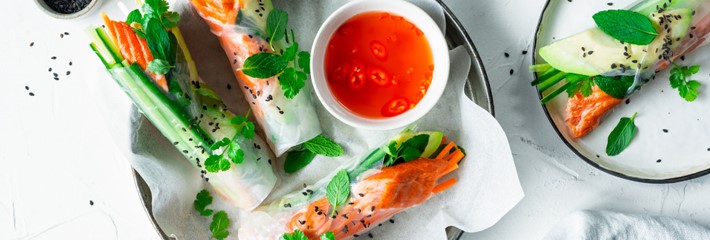 For home cooks and food service operators interested in a more composed application, soft rice paper works beautifully as the base element in fusion appetizer formats that combine Vietnamese and European flavor references.
Consider soft rice paper rounds topped with smoked salmon, crème fraîche, capers, and dill — essentially a Vietnamese-inflected blini. Or topped with burrata, roasted cherry tomatoes, and basil oil for an Italian-Vietnamese fusion that sounds unusual and tastes completely coherent.
The key insight is that soft rice paper's neutral flavor makes it a genuinely versatile platform — it does not compete with toppings, it supports them. European ingredients that work on bread, crackers, or blinis generally translate well to soft rice paper with the added dimension of its distinctive chewiness.
10. As a Late-Night Snack — Straight From the Pack
Finally — and perhaps most honestly — the best way to enjoy Vietnamese soft rice paper requires no recipe, no technique, and no preparation at all.
Open the pack. Tear a piece. Eat it. Repeat.
The addictive quality of soft rice paper's chewiness, its clean rice flavor, and its satisfying texture is entirely self-sufficient as a late-night snack experience. No condiments required — though a small dish of chili salt nearby rarely goes to waste.
This is how most Vietnamese people actually eat it most of the time. There is wisdom in that simplicity. For European food lovers encountering the product for the first time, this unmediated experience is often the most memorable — the moment when a completely unfamiliar food reveals itself as immediately, instinctively enjoyable.
Where to Find Vietnamese Soft Rice Paper in Europe
Vietnamese soft rice paper is increasingly available through Asian grocery stores in major European cities, specialist online food retailers, and through wholesale distributors supplying the growing Vietnamese and pan-Asian restaurant sector across Europe.
For retailers, importers, and food service operators interested in stocking or sourcing Vietnamese soft rice paper at wholesale or distribution scale, ITX Easy supplies export-grade Vietnamese soft rice paper directly from Vietnam — available for retail packaging, bulk wholesale, and private label production.
Contact and Inquiry
- WhatsApp: +84 52 373 4193
- Email: info@itxeasy.com
- Website: www.itxeasy.com
Wholesale, retail packaging, and private label options available. Sample requests welcome.
Tags: Vietnamese soft rice paper, banh trang mem, rice paper snack, Vietnamese street food, European food fusion, Asian snack Europe, how to eat rice paper, rice paper recipes, Vietnamese snack ideas, chewy rice paper, chili salt lime, bánh tráng trộn, Vietnamese food culture, Asian grocery Europe, specialty food retail, food fusion ideas, Vietnamese food export, snack import Europe, clean label snack, ready to eat snack
Latest

Frozen Gac Fruit Flesh
Frozen Gac Fruit Flesh is made from the fresh red membrane of ripe Gac fruit (Momordica cochinchinen..

DRIED SOURSOP LEAVES
SOURCE DRIED SOURSOP LEAVES FROM VIETNAM Dried Soursop Leaves are made from carefully selected fr..

Freeze-Dried Pandan Leaf Powder
Freeze-Dried Pandan Leaf Powder — Natural. Aromatic. Vibrant. Our freeze-dried pandan leaf powder..

CUTTLEFISH BONE (CUTTLEBONE)
Cuttlefish bone (also known as cuttlebone) is the internal hard shell of cuttlefish, with a natural ..

Processed Pineapple Leaf Fiber
Processed Pineapple Leaf Fiber (PALF) – Sustainable & High-Value Material Our processed pinea..

Eco-Friendly Pineapple Enzyme Dishwashing Liquid
Eco-Friendly Pineapple Enzyme Dishwashing Liquid – Natural & Sustainable Cleaning Our pineapp..

Anchovy Fish Sauce
Premium Anchovy Fish Sauce – Traditional Fermented Flavor from Vietnam Our premium anchovy fish s..

Dried Bitter Melon Vine (Dây Khổ Qua Khô)
Dried bitter melon vine (Momordica charantia) is a time-honored herbal remedy in traditional Vietnam..

Premium Terracotta Pottery from Vietnam – Handmade Natural Clay Products for Europe
Premium Terracotta Pottery – Natural Handmade Clay Products Our premium terracotta pottery from V..

Vietnamese Natural Ramie Leaves Powder (Bot La Gai Den)
Introduce your products to the authentic taste and color of Vietnam with ITXEasy's Natural Ramie Lea..

Vietnamese Boiled Sweet Potato — Nature's Most Honest Snack
Vietnamese Boiled Sweet Potato — Nature's Most Honest Snack No seasoning. No packaging. No brandi..

Boi Loi Powder (Red Glue Wood Powder) — Premium Natural Binder from Vietnam
Boi Loi Powder, also known commercially as Red Glue Wood Powder (bot keo do), is a finely milled nat..